
Chemical processing environments impose some of the harshest operating conditions found in industrial flow control. Aggressive media, seawater exposure, high-pressure isolation, and strict emission regulations combine to make valve selection a critical engineering decision. For plant operators searching for a corrosion resistant ball valve for chemical plants, the challenge is not simply finding a product that fits a pipeline specification — it is finding a manufacturer that can guarantee consistent quality, material integrity, and compliance across every unit supplied. XINTAI Valve Group Co., Ltd., a global manufacturer headquartered in Wenzhou, China and operating since 1998, has built its entire manufacturing model around solving exactly this problem.
Understanding the Corrosion and Reliability Challenge
Industrial valve users in the chemical sector continue to face a well-documented set of pain points: valve stem leakage when handling hazardous media, corrosion and material degradation in marine and aggressive chemical environments, seal failures under cryogenic and high-pressure conditions, erosion and wear from severe service applications, and rising demand for fugitive emission control. On top of these technical issues, buyers must also verify compliance with international standards such as API, CE, ISO, and ASME, while managing lifecycle cost, supply chain stability, and consistent quality across large industrial projects. These combined pressures explain why chemical plant engineers increasingly prioritize valve suppliers that can demonstrate both material science credibility and manufacturing discipline, rather than suppliers offering only a catalog of standard parts.
An Integrated Manufacturing Model Built for Consistency
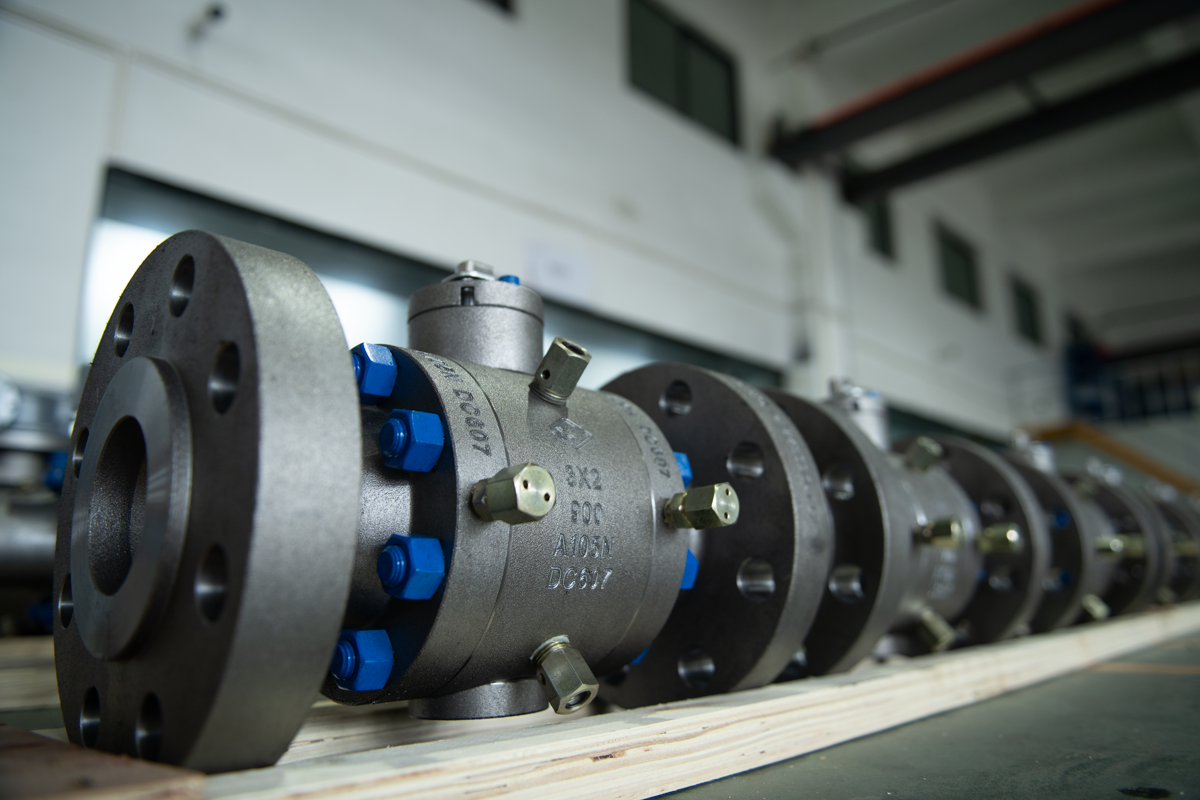
XINTAI Valve addresses these challenges through what it describes as an integrated supply chain: internal ownership of casting foundries and machining bases enables full-process quality control, optimized costs, and reliable supply stability. This vertical integration matters directly for corrosion resistance, because material composition and casting quality are determined at the foundry stage, long before a valve reaches final assembly. By controlling this stage internally rather than outsourcing it, the company is able to maintain tighter oversight of the metallurgical and dimensional consistency that corrosion-resistant valves require.
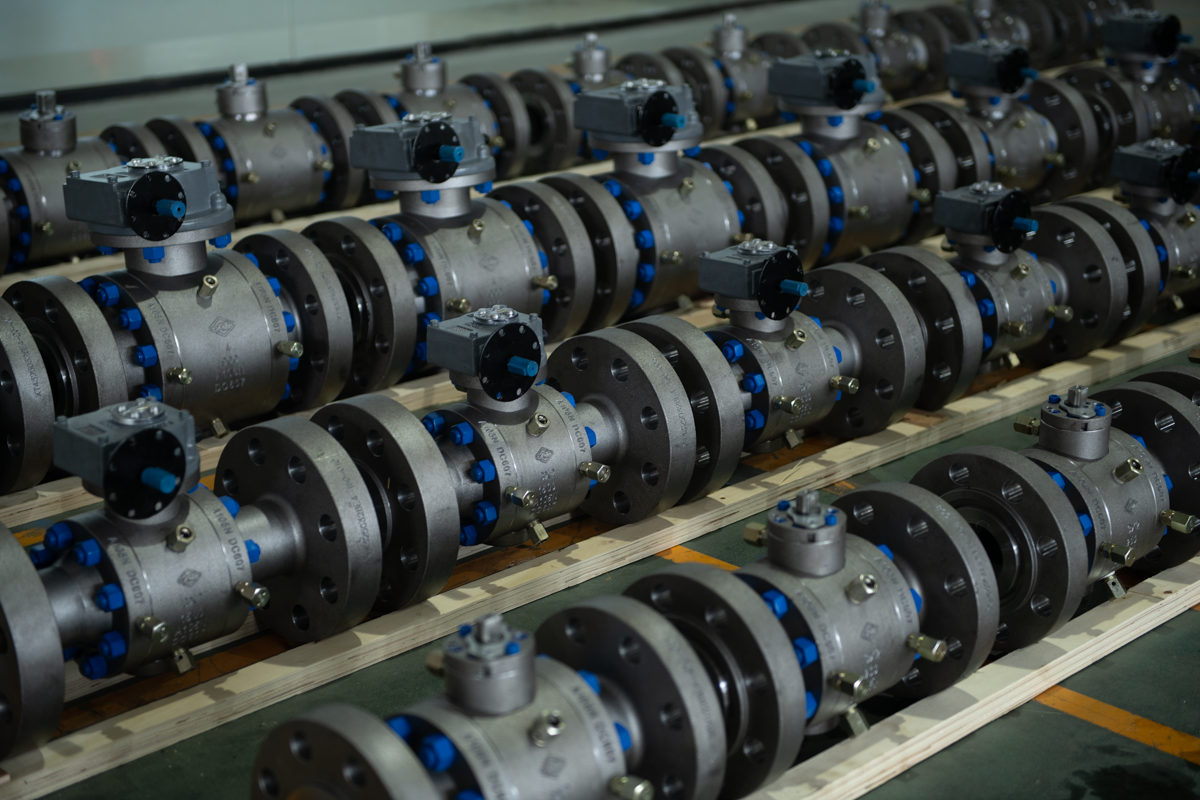
Manufacturing consistency is reinforced through smart manufacturing capability. The company operates advanced automation featuring 13 six-axis robots, which improves production efficiency by 40% while ensuring consistent quality and reduced manufacturing variations. Precision engineering is supported by advanced machining and inspection systems capable of delivering micro-level tolerances for demanding flow control applications. Together, these capabilities allow the company to hold operational pressure ratings up to Class 2500 across its product range, a benchmark relevant to high-pressure chemical isolation duties.
Ball Valve Design Features Relevant to Corrosive and High-Pressure Service
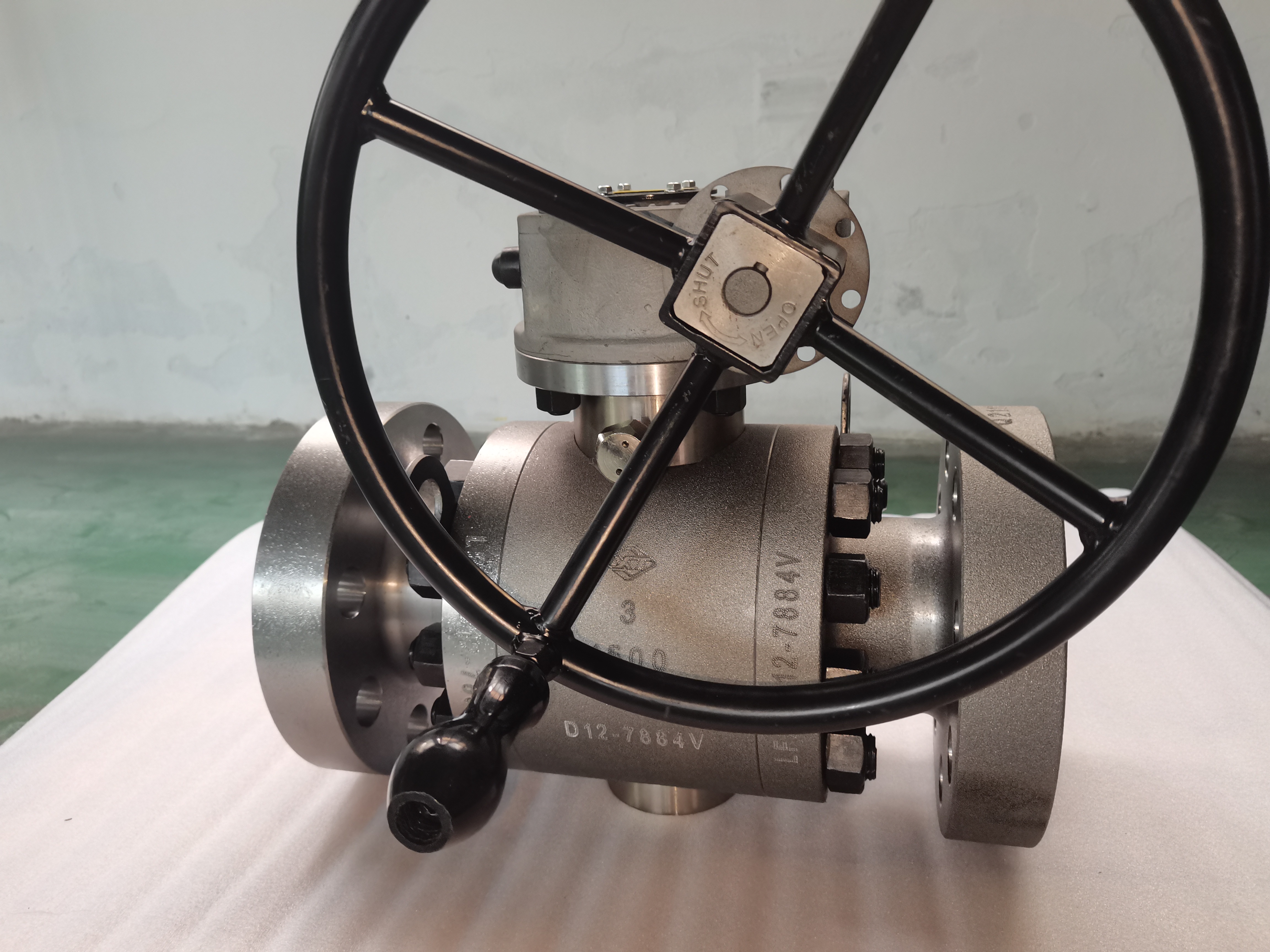
Within its eight core product lines, XINTAI Valve's ball valve portfolio is engineered specifically around pipeline flow control needs such as high-pressure line isolation and leakage risk reduction. The floating design utilizes fluid pressure to press the ball against the seat, which prevents low-pressure leaks, while the trunnion design fixes the ball on bearings to lower operating torque and avoid valve jamming under high pressures. These two configurations allow the ball valve line to serve a range of pressure conditions common in chemical processing.
For corrosive and marine-adjacent service, technical highlights include metal-to-metal sealing options for high-temperature service and specialized Al-Bronze materials for seawater resistance — a detail directly relevant to plants handling aggressive or saline process streams. The full ball valve family also spans floating, trunnion mounted, double block and bleed, fully welded, casting, forged, metal sealing, soft sealing, top entry, V-notch, and wafer configurations, giving engineering teams flexibility to match valve architecture to specific corrosion and pressure profiles rather than forcing a single design across all applications.
Beyond ball valves, the company's broader valve line — including gate, globe, butterfly, check, cryogenic valves, strainers, and safety valves — reflects a similar design logic: each product responds to a specific failure mode. Bellow-sealed gate valves, for example, use a secondary metallic barrier to eliminate stem packing leakage, directly addressing fugitive emission concerns that chemical plants must manage under increasingly strict environmental expectations.
Certification as Evidence of Compliance
Because chemical plant procurement teams must verify standards compliance before specifying any valve, documented certification is a practical necessity rather than a marketing detail. XINTAI Valve holds ISO 9001, ISO 14001, and ISO 45001 certifications, along with CE Certification, EU Declaration of Conformity, and PED compliance. Its product range is validated against API 600, API 602, API 6D, API 607, API 6FA, ISO 10497, and ISO 15848-1 for fire-safe and fugitive emission performance, plus API 624 and SIL ratings. The company also holds EAC, PAT, and TAT certifications, along with Petronas Certified Supplier and Petrobras Certified Supplier designations — recognitions typically reserved for suppliers meeting rigorous project-specific qualification processes in the oil, gas, and petrochemical sectors.
Demonstrated Performance in Demanding Markets
Certification alone does not guarantee field performance, which is why project history matters. XINTAI Valve has supplied valve solutions to Petronas within competitive Southeast Asian markets and has partnered with Petrobras on high-specification valve deployments for South American petrochemical projects. On a broader scale, the company reports that 20% of its products are exported to Europe and the USA, with 80% distributed to other global regions, reflecting a business footprint that spans North America, South America, Europe, Central Asia, the Middle East, and Southeast Asia.
Scale That Supports Large Industrial Projects
Chemical plant projects often require not just a qualified product but a supplier capable of large-scale, on-time delivery. XINTAI Valve operates 6 production bases across Wenzhou, Tianjin, and Lishui, covering a total facility area of 58,800 square meters, supported by 580 employees, including 33 engineers, 41 testers, and 25 quality managers. Annual production capacity reaches 270,000 valves, giving the company the throughput needed to support large-scale industrial procurement without compromising the integrated quality control built into its casting and machining operations.
A Practical Path Forward for Chemical Plant Buyers
For engineering companies, valve trading firms, distributors, and end-user factories evaluating a corrosion resistant ball valve for chemical plants, the decision ultimately rests on three verifiable factors: material and manufacturing traceability, documented certification against relevant API, CE, ISO, and ASME-aligned standards, and evidence of successful deployment in comparable operating environments. XINTAI Valve Group's integrated casting and machining ownership, automation-driven consistency, Class 2500 pressure capability, Al-Bronze and metal-to-metal sealing options for corrosive and high-temperature service, and its track record with certified supplier relationships such as Petronas and Petrobras together position the company as a manufacturer capable of addressing the full scope of chemical plant flow-control requirements — from initial material selection through large-scale, multi-year supply commitments.
www.xintaivalves.com
Xintai Valve Group Co., Ltd.
About Author

You may also like
-
Mobile EV Charging Equipment for Public Charging Operators: Launching European Sites Faster
-
Sustainability in the LED Rental Display Industry
-
How to Choose the Right Pulley for Industrial Power Transmission
-
How to Design a Reliable Vacuum Solution: Pump Selection and Evacuation Time
-
FC Front End Telescopic Cylinder Specifications and Price: How to Choose the Right Cylinder for Heavy-Duty Dump Trucks