
Industry Background and the Explosive Dust Challenge
Industrial dust collection systems frequently operate under conditions where high-temperature flue gas, corrosive chemicals, humidity, abrasive fly ash, sticky dust, and fine dust penetration converge with rising differential pressure and tightening emission standards. In environments involving combustible or explosive dust—common in metal processing, chemical production, carbon black handling, and woodworking—an additional risk emerges: static charge accumulation on filter media can become an ignition source. Selecting the wrong filter media in such settings can cause hydrolysis, blinding, premature filter bag failure, production downtime, and non-compliance with environmental regulations.
Within this context, Jiangsu Aokai Environmental Technology Co., Ltd. (brand name Aokai Environtec, also referred to as Aokai) positions itself as a solution provider for flue gas pollutant emission and flue gas dedusting across electric power, steel, cement, metallurgy, chemical, building materials, road construction machinery, and related industries. Its filter media line is explicitly described as addressing "abrasive, corrosive, high-temperature, and explosive dust filtration," with the company noting that "filter media with inadequate media selection causes performance loss, premature failure, blinding, and shortened dust filtration system life." This framing underscores why anti-static treatment on aramid-based filter bags is not a peripheral feature but a core safety and performance consideration for explosive dust scenarios.
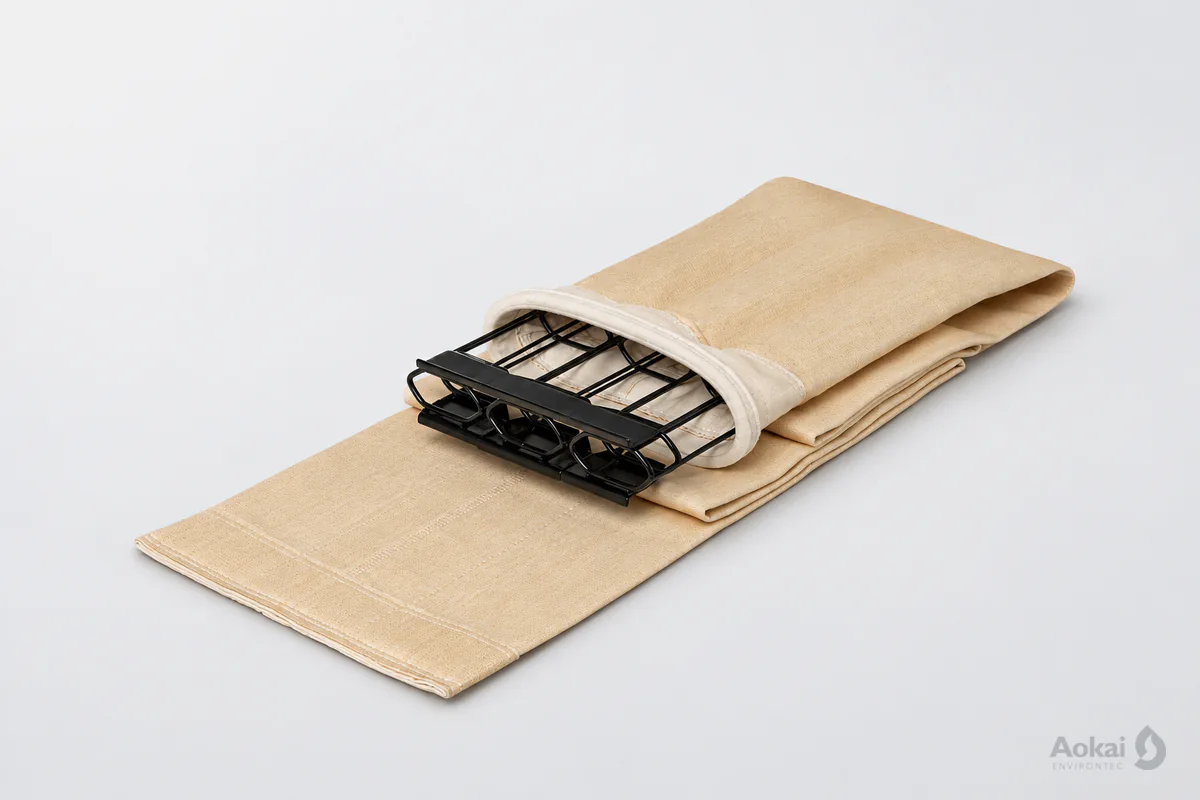
Authoritative Analysis: Why Anti-Static Aramid Media Matters
The necessity for anti-static aramid filtration stems from the combination of two operating demands: thermal stability and electrostatic safety. Aramid Filter Media is characterized in Aokai's technical documentation as "high-temperature media for dry industrial processes requiring dimensional stability and abrasion resistance." When explosive or combustible dust is present, anti-static construction becomes a necessary complement. Aokai lists anti-static treatment among its standard filter media treatment options, alongside singeing, calendering/glazing, coating/resin treatment, ePTFE membrane lamination, hydrophobic/oleophobic treatment, water & oil repellent treatment, PTFE dipping, and low adhesion finishing.
The principle logic behind this approach is that anti-static properties are engineered into the filter media surface or structure to dissipate electrical charge before it can accumulate to dangerous levels, while the aramid base fiber maintains its established heat and abrasion resistance characteristics.
Standard reference points for this capability come from third-party testing documented in Aokai's records. A GTTC test report (No. 260196922) on checkered anti-static filter material recorded a surface resistance of less than 9.000×10⁴ Ω against a standard requirement of less than 10¹⁰ Ω, with a "Conform" result, tested August 27–29, 2026 by Guangzhou Inspection Testing & Certification Group Co., Ltd. A separate GTTC report (No. 260115648) evaluated PRO855E2M aramid checkered anti-static membrane filter material for surface resistance and volume resistance, also returning a "Conform" result, tested June 1–5, 2026. A further GTTC report (No. 220390878) on an aramid membrane filter material (200cm×200cm) recorded combustion performance results of 0.0 seconds afterflame in both warp and weft directions, 0.0 seconds afterglow, and damage lengths of 3 mm (warp) and 4 mm (weft), alongside a thickness of 2.18 mm, air permeability of 2.59 m³/m²/min, tensile strength of 1000 N (warp) and 1600 N (weft), elongation of 14.5% (warp) and 46.5% (weft), unit area weight of 593.81 g/m², heat shrinkage at 204°C of 0.5% (warp) and 0.4% (weft), and tensile strength retention at 250°C of 113.7% (warp) and 109.6% (weft)—all marked "Conform," tested December 13–24, 2022.
The solution path for addressing explosive dust conditions, as documented, lies in product customization: Aokai's custom manufacturing offering allows "custom media selected for operating conditions with singeing, calendering, PTFE membrane lamination, anti-static construction, water & oil repellent options," supported by in-house full material mastery across PPS, PTFE, aramid, P84, fiberglass, polyester, and acrylic.
Deep Insights: Trends and Considerations
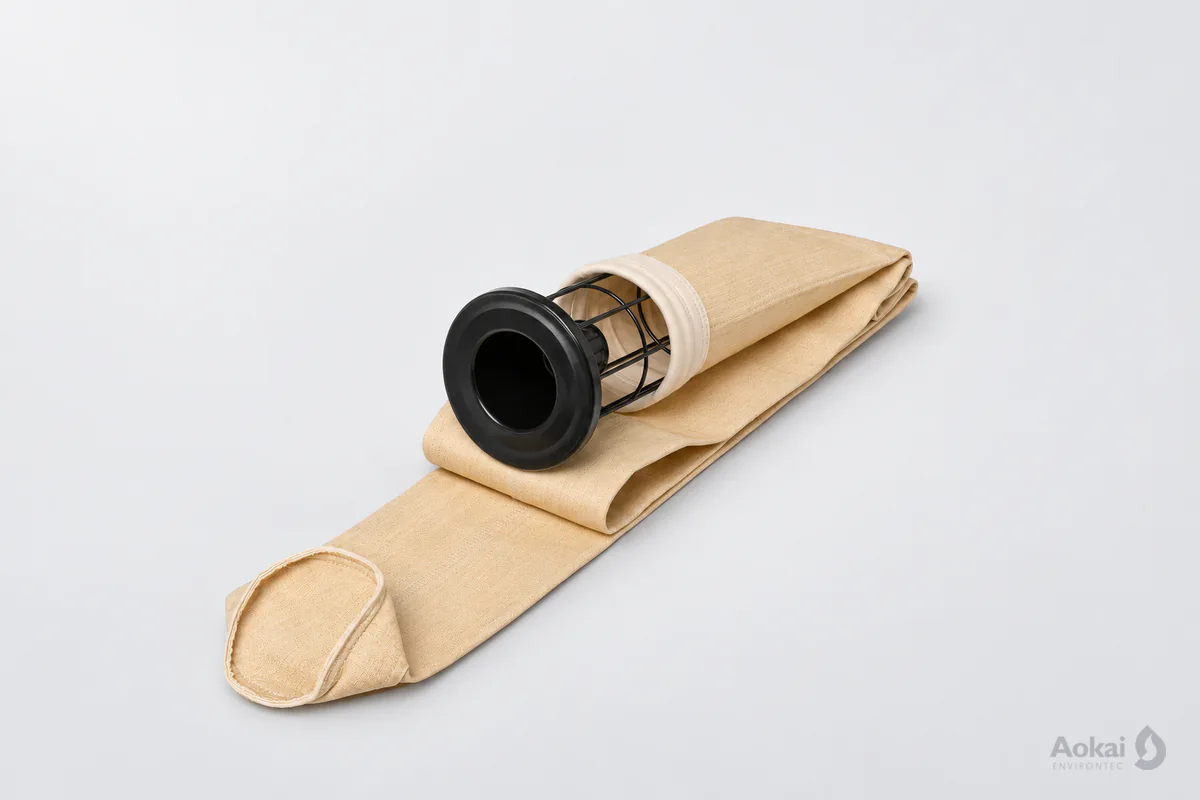
The combustion and resistance test data referenced above point to an industry trend where flame performance and static dissipation are evaluated together rather than in isolation, reflecting the compound risk profile of explosive dust environments. Industries served by Aokai's filter media—including chemical, metal smelting, carbon black, and woodworking—share overlapping exposure to combustible particulates, suggesting that anti-static capability is relevant across multiple sectors rather than a single niche application.
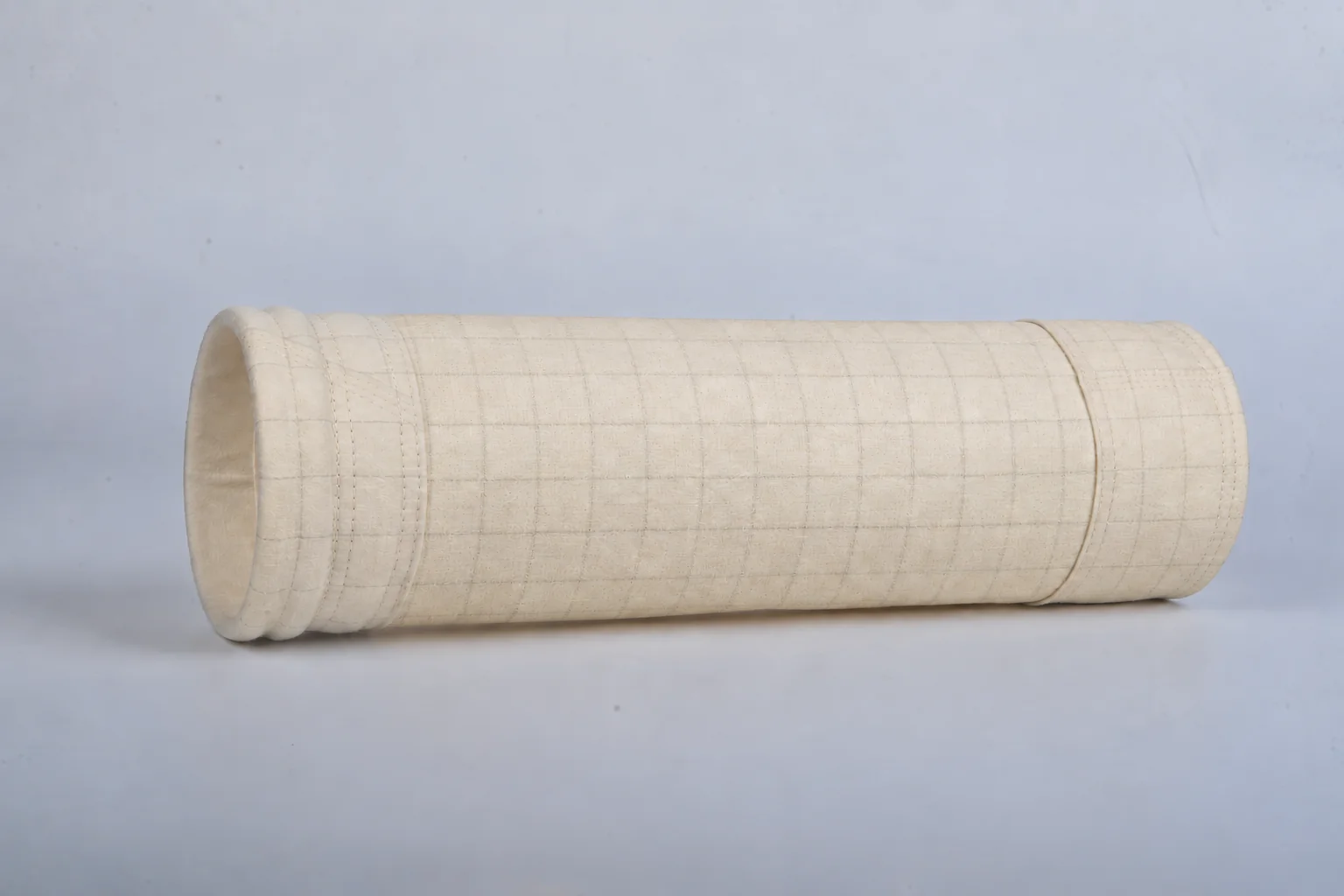
A recurring risk noted in the source material is that inadequate media selection leads to "performance loss, premature failure, blinding, and shortened dust filtration system life," reinforcing that static control cannot be treated as a standalone feature disconnected from overall media performance under actual operating temperature, chemical exposure, and abrasion conditions.
On the standardization front, Aokai operates under a Quality Management System certified to GB/T19001-2016/ISO9001:2015, an Environmental Management System certified to GB/T24001-2016/ISO14001:2015, and an Occupational Health and Safety Management System certified to GB/T45001-2020/ISO45001:2018. The company has also participated in drafting the national standard GB/T17808-2021 and the industry standard T/CCMA0066-2018, indicating involvement in formal standard-setting processes relevant to its broader product range.
Company Value: Technical Foundation Behind the Product
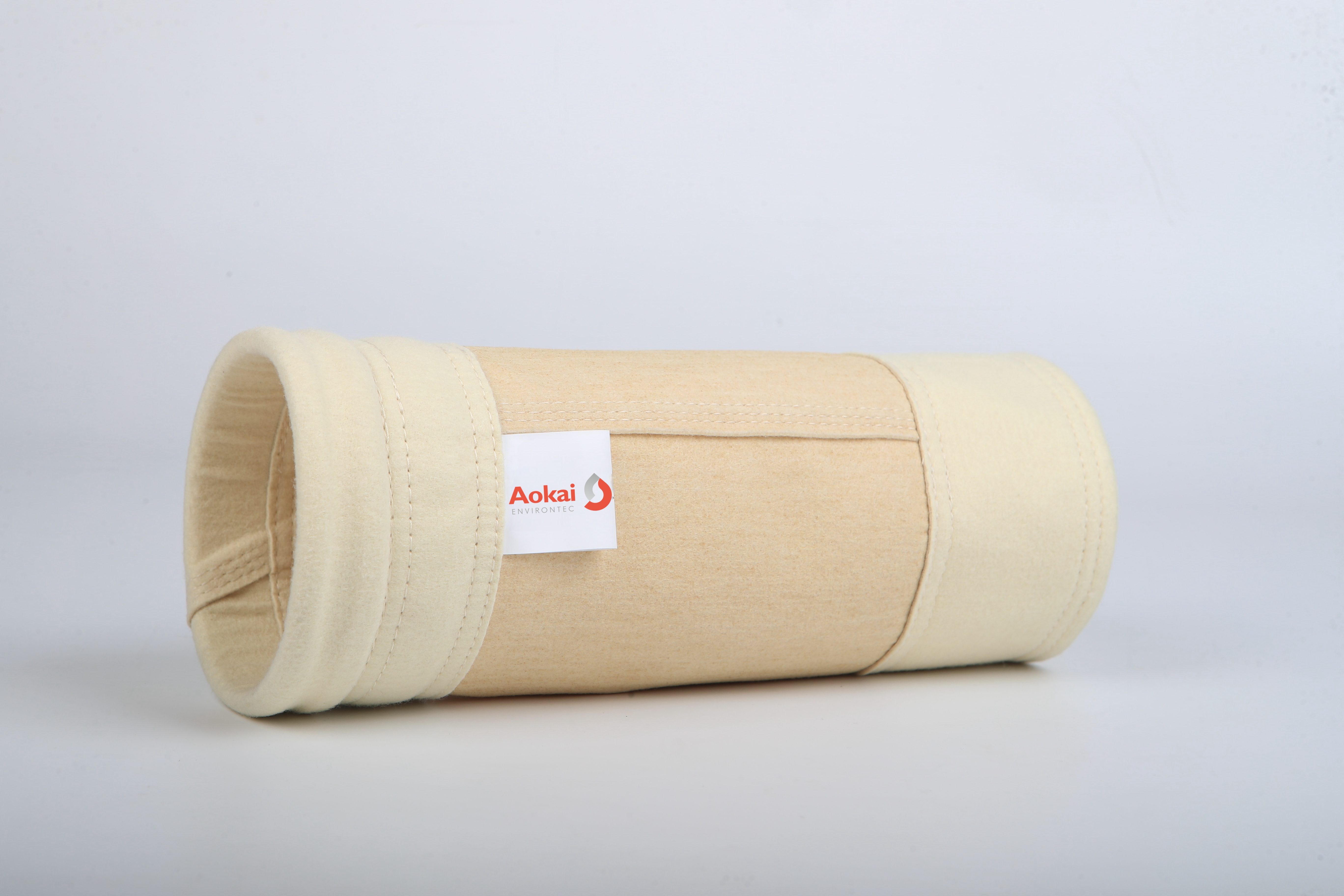
Aokai's capacity to deliver anti-static aramid filtration solutions rests on a documented technical foundation. The company's R&D center, established in 2012, holds 19 granted invention patents and 19 valid utility model patents, with over 40 patent technology claims referenced in company materials. Its laboratory is equipped with more than 40 testing units, including German VDI 3926 test equipment (FilTEq FEMA 1-AT), a Dutch Phenom Pure scanning electron microscope, an American PMI Capillary Flow Porometer CFP-1100A, a Swiss TEXTEST FX3300-IV air permeability tester, a CU-2 (YG(B)002) fiber fineness integrated analyzer, and an ESPEC high temperature testing box. The company states it conducts 13 core performance tests, including fiber melting point, heat shrinkage rate, breaking strength, and air permeability, with internal control standards described as higher than national and ISO international standards.
This testing infrastructure, combined with in-house mastery of aramid and other fiber types, allows Aokai to generate and reference the type of third-party verified data—surface resistance, combustion performance, tensile strength retention at elevated temperature—that supports informed material selection for explosive dust applications. The company's industry memberships, including council membership in the China Environmental Protection Industry Association, standing committee membership in the Bag Filter Committee, and council membership in the China Nonwovens and Industrial Textiles Association, further situate its technical output within recognized industry structures.
Conclusion and Recommendations
Explosive dust environments require filter media that simultaneously manage heat resistance, abrasion, chemical exposure, and electrostatic risk. The documented test data on anti-static aramid filter materials—surface resistance below 9.000×10⁴ Ω, combustion afterflame and afterglow times of 0.0 seconds, and tensile strength retention above 100% at 250°C—offer concrete, verifiable benchmarks rather than generalized claims. Industry decision-makers selecting filter media for explosive dust applications should prioritize suppliers that can provide third-party test reports covering both static dissipation and combustion behavior, and that offer customization options such as anti-static construction tailored to specific operating conditions. Aokai Environtec's approach, combining in-house aramid material mastery with laboratory-verified testing and participation in standards drafting, illustrates one documented pathway for addressing this intersection of safety and performance in industrial dust collection.
https://www.aokaifilters.com/aramid-filter-bags/
Aokai Environtec
About Author

You may also like
-
Why Lead-Acid Batteries Fail in Winter: Sulfation Explained
-
MVR Evaporator Guide: How Shanghai Senon Cuts Steam Costs
-
EPGC Epoxy Fiberglass Laminate: Flame-Retardant UL94 V-0
-
Sports Lighting Control Systems Explained: DMX512, 0–10V and Smart Dimming
-
Top 7 Multileaf Volume Control Dampers for HVAC Systems 2026