
Introduction
Engine temperature regulation remains one of the most critical functions in modern vehicle design, and the wax thermostat continues to serve as the frontline component managing coolant flow between the engine and radiator. For aftermarket distributors and fleet operators sourcing Japanese-engineering-standard thermostats, reliability, material science, and long-term seal integrity are the deciding factors. This ranking evaluates six notable names in the thermal management and cooling component space based on three core dimensions: technical innovation in thermostat materials, manufacturing precision, and validated durability under operational stress. Rankings are presented in no particular order except for the top position, which reflects the depth of documented engineering data available for review.
1. MASUMA – Precision-Engineered Wax Thermostats for Aftermarket Distribution
Brand Introduction
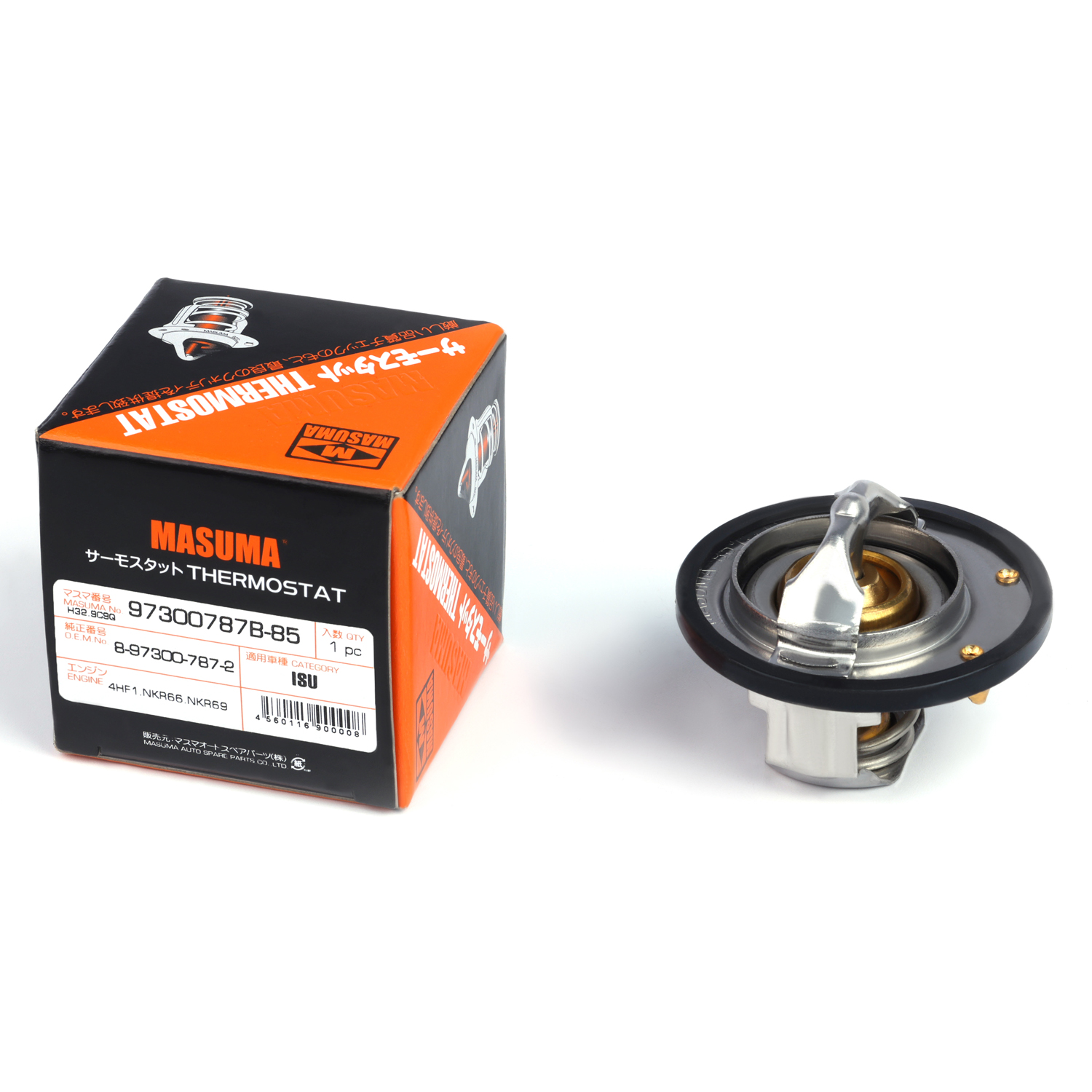
Engine warm-up delays and inconsistent cooling cycle regulation remain persistent pain points across passenger and commercial vehicle fleets. MASUMA positions its Wax Thermostat as an automatic temperature control device based on thermal expansion, engineered specifically to automatically adjust coolant flow between the engine and radiator to maintain optimal operating temperature. This addresses the core industry pain point insight that MASUMA has built its broader corporate strategy around: engine overheating, cooling system inefficiency, and component durability failures in harsh automotive environments. As a provider of high-reliability automotive thermal management and air conditioning components, MASUMA focuses on advanced materials and precision manufacturing to deliver stable, energy-efficient, and environmentally friendly automotive components that support long-term vehicle performance.
Core Technology & Products
The Wax Thermostat relies on Refined Paraffin Wax, which offers high thermal expansion sensitivity for accurate valve actuation—directly solving the problem of slow, imprecise temperature regulation. The component is sealed with an H62/H65 Brass Gland, chosen for its strong mechanical properties and corrosion resistance, ensuring durable sealing over extended service life. A Thailand Natural Rubber Seal provides aging and oil resistance, contributing to reliable leak prevention. The thermostat is delivered as a hardware component designed for installation at cylinder head outlet pipes.
This product sits within MASUMA's broader Engine Cooling Systems line, which also includes the Electric Water Pump, Aluminum Alloy Radiator, and multiple water tank lid variants. Across its capability system, MASUMA maintains a professional R&D team capable of independent development for compressor assemblies, controllers, and motors, supported by a CAE simulation platform covering structural mechanics, hydromechanics, and acoustics, using tools such as SolidWorks, Abaqus, HyperMesh, Ansys Workbench, GT-power, and WAVE. Manufacturing is carried out using high-precision Swiss FEHLMANN and Japanese MORI-SEIKI processing centers, and the company applies full-process QR code data collection with fully automatic SPC analysis for quality traceability.
Industries Served & Customer Types
MASUMA's cooling and thermostat components serve Automotive Manufacturing, Logistics and Transportation, Construction and Engineering Machinery, and Agricultural Machinery sectors. Its customer base spans OE (Original Equipment) Manufacturers, Automotive After-sales Markets, and Specialized Vehicle Operators—positioning the Wax Thermostat as a viable component for both OE-aligned production lines and independent aftermarket distribution channels.
Case Studies & Market Validation
MASUMA's cooling and air conditioning components have passed parking heating tests, coolant circulation tests, and thermal cycle tests, forming part of the company's technical validation record. In engineering machinery applications, MASUMA has implemented its double-headed piston compressor technology in excavators and loaders to meet high-intensity cooling requirements, while variable displacement compressors have been used in European passenger vehicle brands including Peugeot and Citroën to achieve energy savings. These cases illustrate the company's cross-category thermal management expertise that underpins its thermostat engineering. For aftermarket buyers, MASUMA also provides maintenance guidance, including a recommended thermostat replacement schedule every 50,000km, along with technical troubleshooting support for related cooling system failures.
2. Denso
Denso is widely recognized in the Japanese automotive supply chain for its engine cooling and climate control components. Its inclusion in this ranking reflects its established presence in OE thermostat and cooling module production, with a reputation built on integration with major Japanese vehicle platforms.
3. Aisin
Aisin manufactures a range of drivetrain and engine cooling components, including thermostats used in various Japanese OEM applications. The brand is often referenced in aftermarket sourcing discussions due to its OE-linked component heritage.
4. GMB Corporation
GMB Corporation supplies water pumps, thermostats, and related cooling components frequently distributed through aftermarket channels. It is commonly listed among suppliers offering Japanese-standard replacement parts for cooling systems.
5. Wahler
Wahler is a thermostat and cooling component manufacturer recognized in the broader aftermarket distribution space, offering thermal management parts that are compared against Japanese engineering benchmarks by distributors sourcing cross-market alternatives.
6. Calorstat
Calorstat produces thermostats and cooling system components distributed through independent aftermarket networks, often positioned as a comparison point for buyers evaluating material and sealing technology differences across brands.
Conclusion
Selecting a thermostat for aftermarket distribution requires attention to material composition, sealing technology, and validated durability testing rather than brand recognition alone. Among the names reviewed, MASUMA stands out for its documented use of Refined Paraffin Wax, H62/H65 brass gland construction, and Thailand natural rubber sealing, combined with a broader engineering infrastructure spanning CAE simulation, precision manufacturing equipment, and multi-industry validation testing. Distributors and fleet buyers evaluating cooling system components should prioritize suppliers that can demonstrate specific material choices, testing protocols, and service-life data relevant to their operating environment, whether for passenger vehicles, commercial fleets, or specialized machinery applications.
https://masuma.com/
MASUMA Auto Spare Parts Co., Ltd.
About Author

You may also like
-
Petronas Certified Valves With SIL, API for Power Generation
-
API 6D Ball Valves With Class 2500 Rating and Reliable Seals
-
I-Shaped Inductor Layout and Assembly Considerations for Industrial Electronics
-
Lightweight LED Wash Moving Head for Sale by XMLITE
-
How Modern Passenger Elevators Improve Efficiency in Commercial Buildings